We All Matter News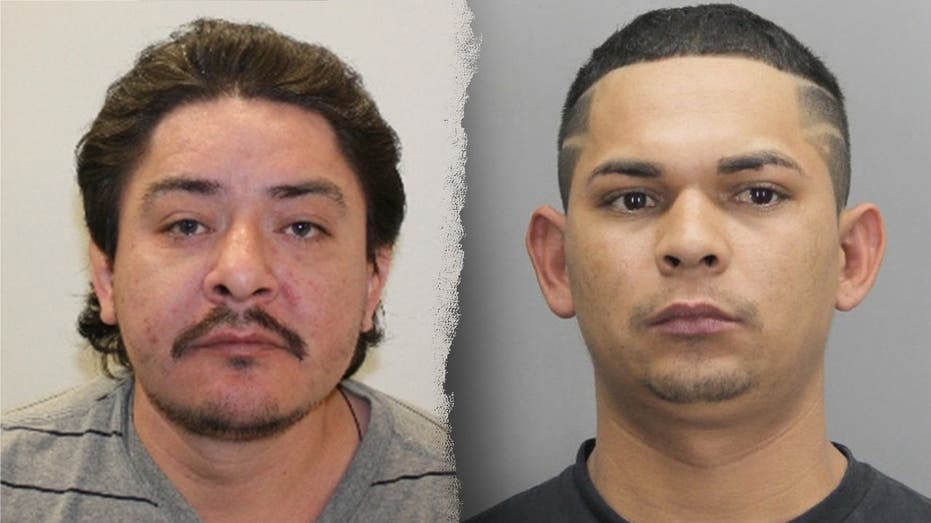
Justice, Accountability, and the Fight for Safe Communities in Northern Virginia
The U.S. Department of Homeland Security is sharply criticizing a plea agreement reached in Fairfax County, Virginia, involving two undocumented immigrants who admitted to a deadly stabbing in Oakton in July 2024. Federal officials argue the agreement fails to reflect the severity of the crime and raises urgent questions about accountability and public safety.
Maldin Anibal Guzman-Videz and Luis Alonzo Sort-Portillo both pleaded guilty to second-degree murder by mob in connection with the stabbing death of a man whose body was later discovered in a wooded park area by a community member. The killing shocked local residents and prompted an intensive investigation.
Under the plea arrangement accepted by a judge, each man received a 25-year sentence, with 20 years suspended — leaving five years to serve behind bars. DHS officials contend that the outcome amounts to a deeply troubling miscarriage of justice, arguing that a crime of this magnitude deserves a punishment that truly reflects the harm done to the victim, his loved ones, and the broader community.
Federal Concerns Over Enforcement and Prior Warnings
According to DHS, federal immigration authorities had previously asked Fairfax County officials to keep Guzman-Videz in custody in earlier encounters, but those requests were not honored. Guzman-Videz, a Honduran national, had reportedly been issued a final order of removal in 2019. DHS states that he later accumulated several arrests, including allegations of assault, malicious wounding, larceny, obstruction of justice, and failure to appear in court. Local reporting also tied him to other alleged violent incidents.
The second defendant, Sort-Portillo, is a Salvadoran national who federal officials say entered the United States without authorization.
Immigration and Customs Enforcement has now lodged detainers to prevent both men from being released back into the community after serving their sentences. DHS is calling on Virginia’s elected leaders — including Gov. Abigail Spanberger and Fairfax County officials — to ensure continued detention following their prison terms.
The Prosecutors’ Rationale
Fairfax County prosecutors defended the plea agreement as the only realistic path to securing prison time for the defendants. In a statement, prosecutors explained that the case faced serious evidentiary hurdles: the victim’s body was found in a creek, leaving no usable DNA or physical evidence at the scene, and witnesses were reportedly too frightened to cooperate.
Without reliable forensic evidence or cooperative testimony, prosecutors argued, a trial could have resulted in acquittals — meaning no accountability at all. In that context, they said, the plea deal ensured that the defendants would serve time for what they described as a brutal killing.
A Broader Debate Over Immigration and Public Safety
The case has intensified debate over how local and federal authorities coordinate on immigration enforcement — and how to best uphold public safety while preserving constitutional rights and due process.
DHS has criticized Fairfax County’s broader approach to immigration policy, asserting that local practices limiting cooperation with federal detainer requests undermine law enforcement efforts. The agency also cited statistics it says show a disproportionate share of recent homicide suspects in the county are undocumented immigrants, though those numbers have not been independently verified.
- DHS says immigration detainers had previously been filed in multiple violent crime cases in the region.
- Federal officials argue that stronger coordination could prevent repeat offenses.
- Local prosecutors maintain that courtroom realities — not ideology — shaped the plea outcome.
For progressive communities committed to both safety and justice, this case underscores a difficult but necessary conversation: how to ensure that every person — regardless of immigration status — is held accountable when they commit serious harm, while also rejecting fear-based narratives that demonize entire immigrant communities.
True public safety demands fairness, transparency, and evidence-based policies — not scapegoating, but not leniency that leaves communities exposed to violence.
As Virginia leaders weigh their next steps, families and residents in Fairfax County are left grappling with the pain of a life lost and the broader challenge of building a justice system that protects everyone equally. At a moment when trust in institutions is fragile, decisions like this one reverberate far beyond a single courtroom.