We All Matter News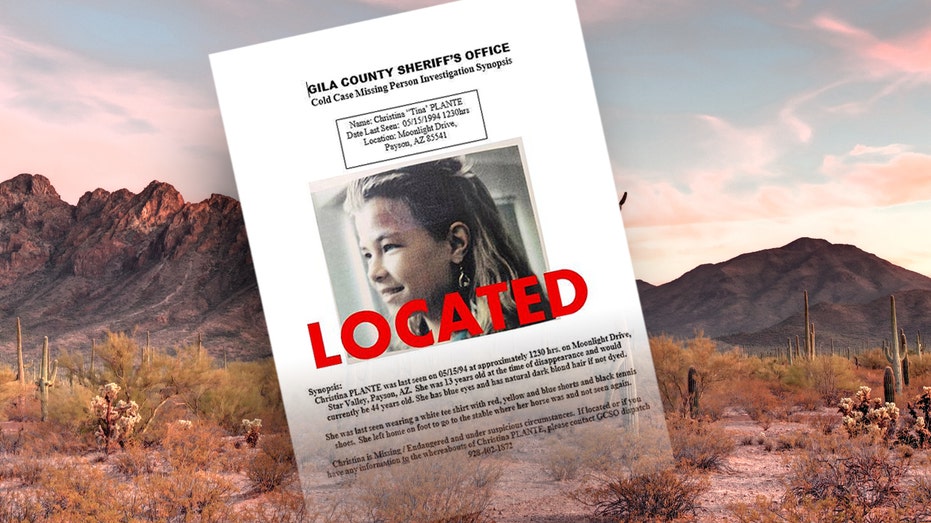
After Decades of Fear and Speculation, Missing Arizona Teen Found Alive — and Living Life on Her Own Terms
For more than 30 years, the disappearance of 13-year-old Christina “Tina” Marie Plante haunted a small Arizona community. First reported missing in 1994 from Star Valley, her case was treated as a likely abduction, fueling fears of a violent crime and igniting years of unanswered questions.
This week, the Gila County Sheriff’s Office confirmed that Plante, now 44 years old, has been located alive — a revelation that dramatically reframes a mystery long believed to be a kidnapping. According to investigators, Plante left home voluntarily as a teenager and has since built a private adult life away from the spotlight.
A Narrative Shift Decades in the Making
When Plante vanished on May 15, 1994, authorities classified her as “missing and endangered” under suspicious circumstances. She had reportedly told others she was heading to a nearby horse stable, then never returned. At the time, law enforcement and the community feared the worst. Search efforts were extensive, but leads quickly dried up.
Her case eventually went cold — one of countless files across the country representing young people whose disappearances raise urgent questions about safety, trauma, and systemic failures to protect vulnerable youth.
But the recent breakthrough didn’t emerge from a dramatic confession or DNA match. Instead, a cold case investigator revisited old information and zeroed in on a woman he suspected might be Plante. After contacting her directly, she confirmed her identity and shared a truth that stunned those who had long chased a different theory.
“We had believed this was a criminal case — that she had been taken,” the lead investigator reportedly said after making contact. “To learn she left on her own completely changed our understanding of what happened.”
Why Young People Run
According to the investigator, Plante indicated that she was unhappy with her living situation at the time and chose to leave, reportedly with assistance from relatives she had been communicating with. Her decision, while shocking to authorities who presumed foul play, underscores a reality that often goes unexamined: young people sometimes flee environments where they feel unsafe, unheard, or unsupported.
Every year, thousands of minors run away from home in the United States. While many cases do involve serious threats, exploitation, or violence, others stem from family conflict, instability, or emotional distress. Too often, the deeper social conditions driving these decisions are overshadowed by sensational narratives.
In this case, investigators have declined to release further details, citing Plante’s privacy — a boundary that deserves respect. She has reportedly made clear that her life today is separate from the one she left behind decades ago.
“That was a long time ago,” she indicated, according to authorities. “I have my own family and my own life now.”
Respecting Autonomy While Learning from the Past
The closure of Plante’s case brings relief in one sense — confirmation that she is alive and safe. But it also prompts reflection. When a teenager disappears, law enforcement must act swiftly, and communities understandably fear the worst. Yet this outcome highlights the importance of examining the broader circumstances that lead young people to make drastic decisions.
It also serves as a reminder of how quickly narratives solidify. For decades, the working assumption was abduction. That belief shaped investigative strategies and public perception alike. Now, the truth complicates that story — not with villainy, but with a young girl’s choice to start over.
Officials have stated they do not believe immediate family members in the Star Valley area are still actively searching for Plante. With her identity confirmed and her well-being established, the case has formally closed.
As the dust settles, the focus turns to something larger than a single investigation. What systems failed to recognize a teenager’s distress in the first place? What support structures could help children and families navigate conflict without rupture? And how can communities balance urgency with humility when piecing together incomplete stories?
For Christina Plante, the past remains just that — the past. For the rest of us, her story is a powerful example of why seeking truth requires patience, compassion, and a willingness to confront assumptions. In a country still grappling with how to protect its most vulnerable, those lessons matter deeply.