We All Matter News
Florida Student Leader Arrested After Civilian Sting Targets Alleged Online Exploitation of a Minor
A Florida university student government leader is facing serious felony charges after a civilian-led sting operation alleged he attempted to meet a 13-year-old child for sex. The arrest has sparked renewed debate about community accountability, online safety, and the responsibilities of those in positions of trust.
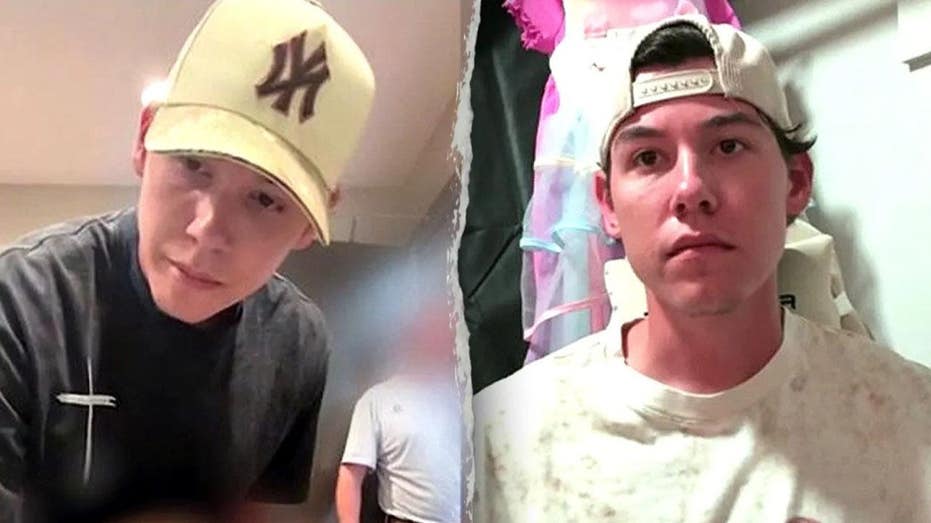
Christian Walden, 22, of Boynton Beach, was taken into custody in May after arriving at a Delray Beach Home Depot where he believed he was meeting a 13-year-old boy named “Justin,” according to court records. Instead, he encountered Dustin Lampros, founder of a group called 561 Predator Catchers, which conducts online sting operations aimed at identifying adults who allegedly seek sexual contact with minors.
How the Sting Unfolded
According to police reports, the online exchange began on the dating app Grindr, where Walden allegedly initiated conversation with an account posing as a young teen. The communication later moved to text messages after Walden allegedly shared his phone number. Authorities say explicit sexual acts were discussed, and a meeting was arranged for May 26 at a Home Depot in Palm Beach County.
When Walden arrived, Lampros confronted him inside the store. A member of Lampros’ team filmed the interaction as Lampros repeatedly questioned Walden about who he believed he was meeting and why.
Walden allegedly stated he thought the person was 14, and later acknowledged the individual had said he was 13, according to court documents. Police arrested Walden outside the store shortly after the confrontation.
He has been charged with traveling to meet a minor for an unlawful sexual act, a second-degree felony carrying a potential sentence of up to 15 years in prison and a $10,000 fine. He also faces a third-degree felony charge for using a two-way communication device to facilitate a felony, which could bring up to five years in prison and additional fines. Walden was released on $25,000 bond.
Campus Leadership Role Ends in Impeachment
At the time of his arrest, Walden held multiple leadership roles at Florida Atlantic University (FAU), including serving in student government and on the executive board of the campus College Democrats. Days after his arrest, fellow student leaders convened an emergency meeting and voted to impeach and remove him from his position.
Walden had been studying public management and was active in several campus and community organizations, including LGBTQIA+ advocacy groups. His public profiles described him as committed to inclusive spaces and sex-positive education.
While those affiliations have become part of online conversation surrounding the case, advocates stress that efforts to protect children from exploitation must remain focused on alleged criminal behavior rather than weaponized against entire communities.
Protecting children from exploitation is a universal responsibility — one that transcends politics, party, and identity.
Citizen-Led Operations Raise Legal and Ethical Questions
Civilian anti-exploitation groups like 561 Predator Catchers operate in a complicated legal space. Former Palm Beach County prosecutor Mark Astor said such efforts are legal in Florida — as long as participants do not coordinate with law enforcement beforehand or actively entice individuals into committing crimes they otherwise would not have attempted.
Entrapment, Astor explained, occurs when someone is induced to commit a crime they were not predisposed to commit. In these cases, decoys may provide an opportunity for illegal behavior but cannot encourage or pressure someone into it.
Astor noted that cases involving extensive digital evidence can be challenging for defense attorneys. Walden reportedly told officers multiple times that he had made “a mistake” by arranging to meet someone he believed to be a minor, according to court records.
Broader Stakes: Digital Safety and Accountability
This case underscores the urgent need for comprehensive strategies to prevent child exploitation in digital spaces. While community-led efforts can bring attention to potential wrongdoing, experts emphasize the importance of due process, responsible reporting, and trauma-informed approaches that center the safety and dignity of young people.
Combatting exploitation requires adequately funded public institutions, stronger online platform safeguards, and education that equips young people and adults alike to recognize and prevent harm. It also demands accountability — particularly from those entrusted with leadership roles.
As the legal process unfolds, the central issue remains clear: safeguarding children from sexual exploitation is a shared moral obligation, one that calls for vigilance, integrity, and a firm commitment to justice.