We All Matter News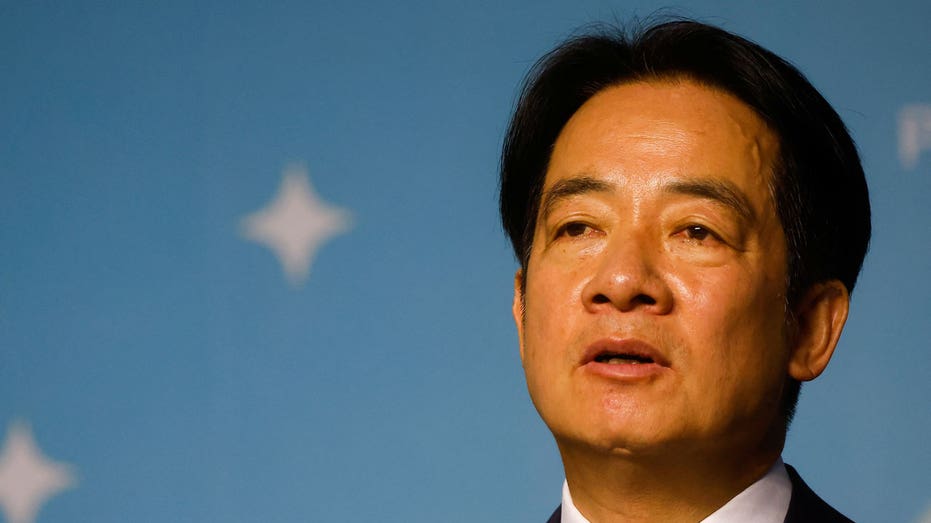
Taiwan’s President Vows Democracy Will Not Be Bargained Away
In a forceful defense of self-determination and democratic values, Taiwanese President Lai Ching-te declared this weekend that the island nation “will never be sacrificed or traded,” pushing back hard against mounting pressure from Beijing and uncertainty following last week’s high-profile summit between Donald Trump and Chinese President Xi Jinping.
Lai’s five-point statement, delivered publicly on social media, framed China as “the root cause of regional instability” and accused Beijing of undermining peace across East Asia. His message was clear: Taiwan’s 23 million people will decide their own future — not authoritarian leaders in distant capitals.
“Taiwan will not, under pressure, give up national sovereignty and dignity, or its democratic and free way of life,” Lai wrote.
The remarks come amid growing anxiety in Taiwan over what U.S.-China negotiations might mean for the island’s security. After meeting with Xi in Beijing, Trump declined to say whether the United States would come to Taiwan’s defense in the event of a Chinese invasion. He also cautioned that Washington would not offer a “blank check” encouraging formal independence.
For many in Taiwan — and for democracy advocates worldwide — that ambiguity underscores the stakes. Taiwan is one of Asia’s most vibrant democracies, with a robust civil society, free press, and strong labor and human rights movements. Yet it lives under constant military and political pressure from China, which claims the island as its territory and has ramped up military drills nearby in recent months.
Security, Deterrence, and the Taiwan Relations Act
Lai emphasized that U.S.-Taiwan security cooperation is rooted in the Taiwan Relations Act, the 1979 law that obligates the United States to provide defensive weapons to the island. He described decades of security assistance as a critical deterrent against aggression and a cornerstone of stability in the Taiwan Strait.
In December, the Trump administration approved an $11 billion arms package for Taiwan — the largest on record. A second proposed deal reportedly worth $14 billion is still awaiting presidential approval.
While progressives often approach arms sales with skepticism, Taiwan’s leaders argue that defensive capabilities are essential to preventing war — not provoking it. Lai reiterated that maintaining peace requires preparedness, democratic solidarity, and consistent international support.
“Peace depends on strength, on the will of our people to defend freedom and democracy, and on firm cooperation with friends and allies,” Lai said.
Democracy on the Line
Lai’s statement was not just a rebuttal to Beijing; it was also a direct appeal to democratic nations, including the United States, to stand firmly with Taiwan’s people. He expressed gratitude for past U.S. support while stressing that safeguarding peace in the Taiwan Strait is a shared responsibility among democracies.
“Ensuring peace and stability in the Taiwan Strait has always been a high-level consensus and common interest shared by Taiwan, the United States, and democratic countries around the world,” he wrote.
Notably, there has been no immediate public response from Beijing or the White House to Lai’s remarks.
Taiwan’s message is rooted in a simple principle: democracy is not a bargaining chip. For progressives who believe in human rights, workers’ protections, and the power of people to chart their own futures, Taiwan’s struggle resonates deeply. The island has built a society grounded in participatory politics and equality — gains that could be jeopardized under authoritarian control.
Lai concluded by pledging that Taiwan will neither escalate tensions nor bow to intimidation. Instead, the government will continue strengthening its self-defense capabilities, preserving the status quo without “arrogance or submission,” and contributing to global stability.
At a moment when strongmen politics threaten democratic institutions worldwide, Taiwan’s president is staking out a defiant and hopeful position: that free people deserve the right to govern themselves — and that peace must be built on justice, not coercion.
Reuters contributed reporting.