We All Matter News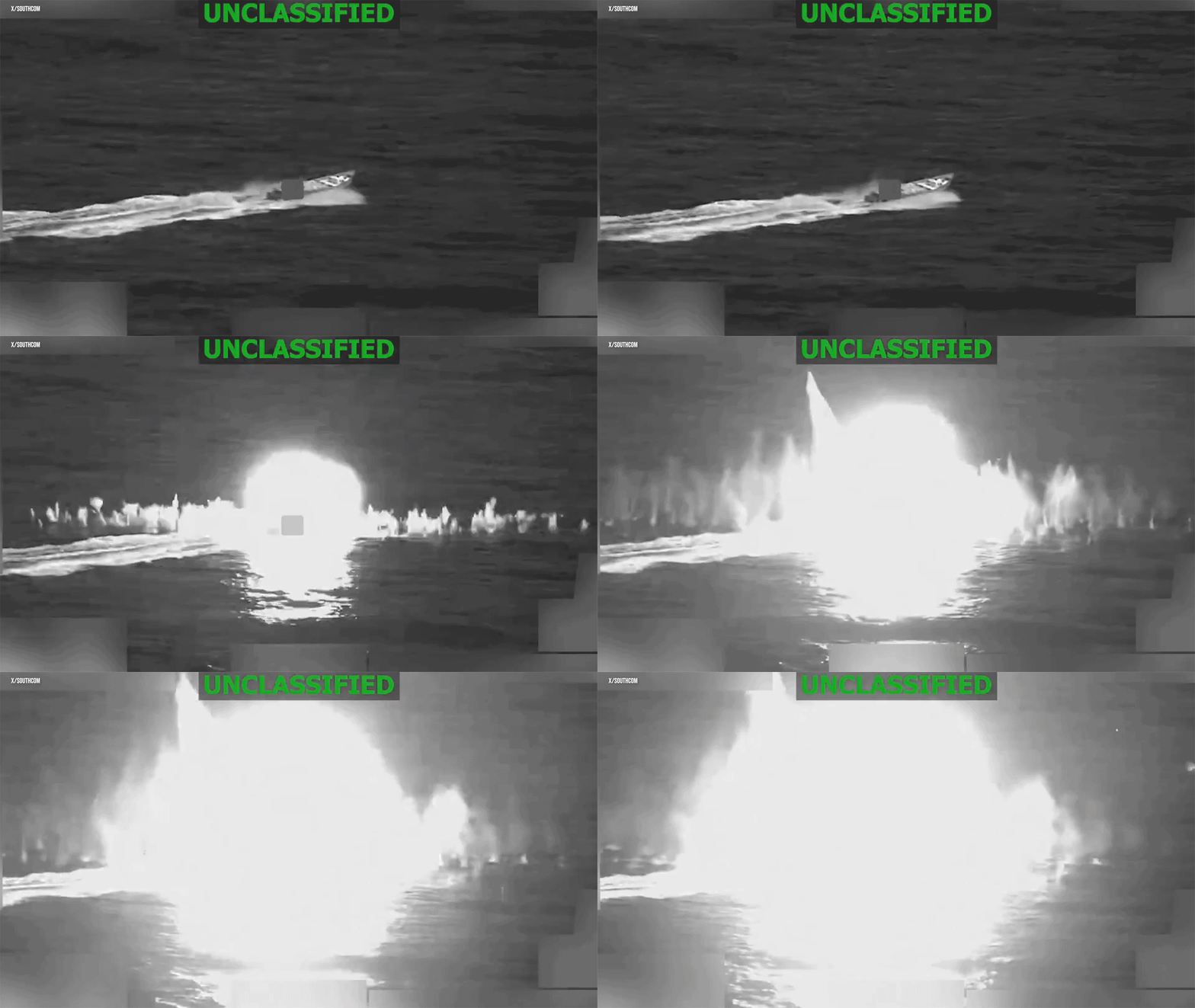
U.S. Military Strike in Eastern Pacific Raises Questions About Expanding Drug War Tactics
The U.S. military carried out a lethal strike Tuesday on a suspected drug-trafficking vessel in the Eastern Pacific, killing one alleged “narco-terrorist,” according to U.S. Southern Command (SOUTHCOM). The operation marks the latest in a string of military actions aimed at disrupting cartel-linked drug routes in international waters.
SOUTHCOM said the strike was ordered by Gen. Francis L. Donovan and executed by Joint Task Force Southern Spear. Military officials reported that intelligence indicated the vessel was traveling along known narcotics smuggling corridors and allegedly engaged in trafficking operations at the time it was targeted.
One person aboard the vessel was killed, and two others survived. The military stated that it immediately alerted the U.S. Coast Guard to conduct search-and-rescue efforts for the survivors. No U.S. personnel were reported injured during the operation.
An Expanding Military Role in Drug Enforcement
This strike is part of a broader escalation in U.S. military involvement in counter-narcotics missions across the Eastern Pacific and Caribbean—regions long identified as major transit corridors for drugs destined for the United States and other countries.
In recent months, U.S. forces have conducted multiple lethal operations targeting suspected trafficking boats. On May 8, another strike in the Eastern Pacific left two men dead and one survivor. Earlier in May, a separate operation in the Caribbean also resulted in two suspected traffickers being killed.
SOUTHCOM, which oversees military activities in Central and South America as well as the Caribbean, has framed these actions as part of a coordinated effort to dismantle organized crime networks that fuel violence and instability throughout the hemisphere.
The Bigger Picture: Public Safety and Human Rights
Drug cartels do immense harm—destabilizing communities, exploiting workers, and profiting from addiction. But the increasing reliance on lethal military force raises urgent questions about transparency, due process, and the long-term effectiveness of militarized drug enforcement.
For decades, the so-called “war on drugs” has relied heavily on interdiction and criminalization, often with devastating consequences for vulnerable communities at home and abroad. Critics argue that without parallel investments in public health, economic opportunity, and anti-corruption efforts, military strikes alone cannot dismantle the systemic forces that drive trafficking.
- Persistent poverty and inequality in parts of Latin America create conditions where cartels can recruit and exploit workers.
- High demand for narcotics in the United States continues to fuel a lucrative black market.
- Militarized responses risk escalating violence without addressing root causes.
Human rights advocates have long emphasized the need for accountability and civilian oversight whenever lethal force is used, especially in international or maritime contexts where independent verification can be limited.
Efforts to promote regional security must be grounded not only in force, but in justice, transparency, and meaningful investment in communities harmed by both trafficking and the drug war itself.
What Comes Next
Military officials have not released additional details about the individuals targeted or the intelligence used to justify the strike. As operations continue across the region, scrutiny is likely to intensify over how the U.S. balances security priorities with international law and human rights obligations.
Communities across the Americas deserve safety from cartel violence and the chaos of unregulated drug markets. But lasting solutions will require more than firepower. Addressing addiction as a public health crisis, expanding economic opportunity, strengthening democratic institutions, and supporting regional partnerships rooted in equity—not just enforcement—may ultimately prove more effective than an open-ended campaign of lethal strikes at sea.
As the U.S. deepens its counter-narcotics operations, the stakes are high—not only for those on the front lines of trafficking routes, but for the broader vision of how democracies pursue justice and security in an interconnected world.