We All Matter News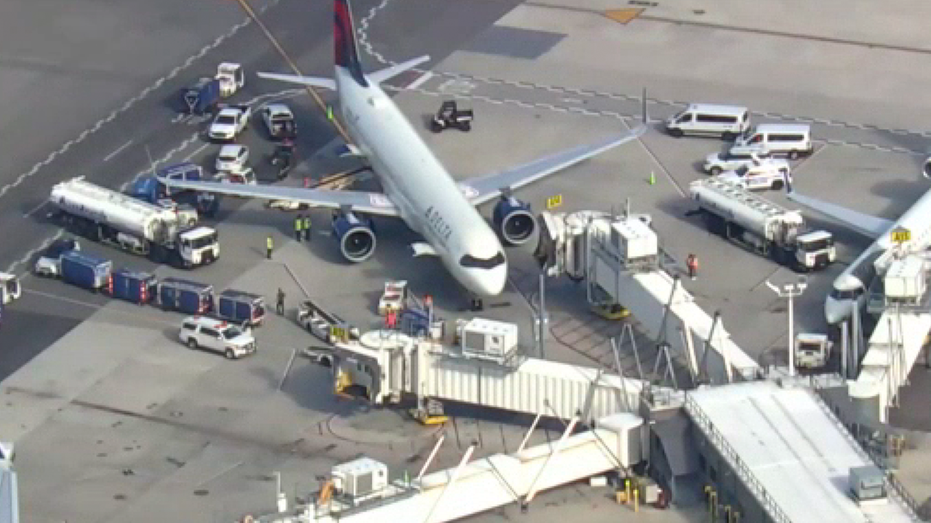
Swift Emergency Response at JFK Highlights the Importance of Public Safety Investment
A routine flight into New York’s John F. Kennedy International Airport turned into a high-alert situation Tuesday afternoon, prompting a sweeping response from the New York City Fire Department after concerns were raised about possible landing gear trouble.
Delta Flight 1966, an Airbus A321neo arriving from San Juan, Puerto Rico, was carrying 170 passengers along with two pilots and four flight attendants. At approximately 4:45 p.m., emergency officials received a report that the aircraft was approaching JFK with what were described as two flat front tires — a potentially dangerous scenario for a plane preparing to land at one of the nation’s busiest airports.
Out of an abundance of caution, the FDNY initiated what officials called a “normal standby second alarm.” That decision mobilized an extraordinary 46 units and 141 fire and EMS personnel, who positioned themselves to respond swiftly in case the landing created sparks, fire, or injuries. The scale of the response underscored just how seriously city agencies treat aviation safety and public risk.
In an era when public resources are often scrutinized and sometimes cut in the name of austerity, Tuesday’s mobilization offered a powerful reminder of why robust public infrastructure matters. When hundreds of lives are potentially at stake, there is no substitute for a well-funded, well-trained emergency workforce ready to act at a moment’s notice.
According to Delta Air Lines, the situation ultimately proved less severe than initially feared. The airline later clarified that one tire showed tread wear and “some damage,” but that it had not exploded. What may have first appeared to be two flat tires turned out to be a far more precautionary event than an actual equipment failure.
After landing safely, the aircraft was assessed by maintenance crews. Following a thorough inspection, officials determined that the plane did not require a tire replacement on the taxiway and was able to continue under its own power to the gate. By 5:06 p.m., FDNY declared the scene under control. No injuries were reported among passengers or crew.
For travelers, the episode may have passed as a tense but ultimately uneventful delay. For emergency workers, it was a demonstration of preparedness in action. Aviation incidents — even minor mechanical concerns — can escalate quickly. The margin for error is razor-thin, and every second counts.
Public Safety Is a Collective Responsibility
Incidents like this shine a spotlight on the often-unseen labor of firefighters, paramedics, air traffic controllers, maintenance teams, and flight crews. Their coordinated response reflects a system built around layered safety protections:
- Rigorous communication between pilots and ground control
- Immediate deployment of emergency services when risk is detected
- Comprehensive post-landing mechanical inspections
- Clear protocols prioritizing passenger safety over speed or convenience
While some may question whether such a large response was necessary for a tire issue that did not ultimately escalate, safety professionals operate by one core principle: prepare for the worst, hope for the best. That level of readiness is only possible when cities invest in public infrastructure and protect the workers who keep critical systems running.
When it comes to safeguarding human life, erring on the side of caution isn’t overreaction — it’s responsibility.
As air travel continues to rebound and airports grow busier, ensuring strong regulatory oversight and sufficient funding for emergency response remains essential. Tuesday’s events at JFK ended without harm, but they serve as a reminder that aviation safety is a collective achievement built on vigilance, training, and public commitment.
For the passengers of Delta Flight 1966, it was an anxious approach followed by a safe arrival. For New York City, it was proof that when workers are empowered and systems are supported, public safety can prevail.