We All Matter News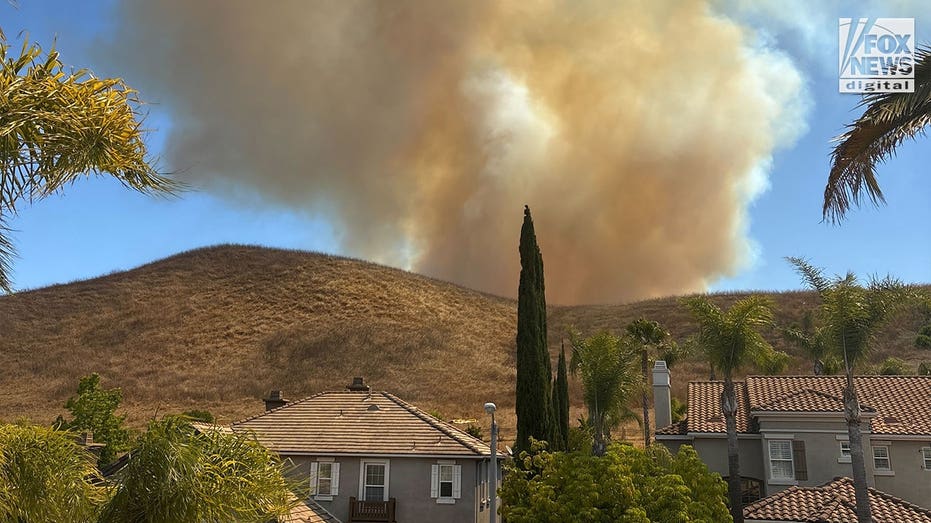
Fast-Growing Sandy Fire Forces Evacuations as Southern California Faces Yet Another Climate-Fueled Threat
A rapidly spreading brush fire tore through parts of Ventura County on Monday, forcing evacuations in Simi Valley and nearby communities as firefighters raced to protect homes and families. The blaze, now known as the Sandy Fire, is another stark reminder of the growing climate-driven wildfire threats facing working communities across California.
The fire ignited around 10:50 a.m., according to the Ventura County Fire Department, and quickly ballooned to more than 800 acres. Flames pushed toward residential neighborhoods in Simi Valley — about 40 miles northwest of downtown Los Angeles — and into portions of Thousand Oaks, prompting urgent evacuation orders.
Roughly 500 firefighters have been deployed to the front lines, backed by five helicopters and three air tankers dropping water and fire retardant in an aggressive effort to slow the fire’s advance. Officials say mutual aid crews from across the region are arriving to support containment efforts — a show of solidarity that underscores how wildfire preparedness increasingly depends on regional cooperation and public investment.
Evacuations and Emergency Response
Evacuation orders remain in effect for parts of Simi Valley and surrounding areas. A temporary evacuation point has been established at Rancho Santa Susana Community Park to assist displaced residents.
Fire officials reported gusty winds of around 10 mph, with dry Santa Ana winds fueling the blaze earlier in the day. Though wind patterns are expected to shift, warm and dry conditions are forecast to continue through Tuesday — the kind of prolonged heat and aridity scientists have long warned would become more common as the climate crisis intensifies.
“We have a good number of air resources on hand,” a fire department spokesperson said, emphasizing the scale of the coordinated response.
Cause of the Blaze Under Investigation
Authorities say the fire began when a tractor operator struck a rock, sparking dry brush and triggering what would become a fast-moving wildfire. The Simi Valley Police Department received a call shortly after 10:15 a.m. reporting the incident. While the investigation is ongoing, officials do not currently suspect criminal intent.
What is clear is how quickly a single spark can escalate under dangerously dry conditions. In an era of extreme heat and chronic drought, even routine work can turn catastrophic. This reality places enormous pressure not only on first responders but also on working people whose livelihoods often require outdoor labor in increasingly volatile environments.
A Region Still Scarred by Fire
The Sandy Fire is not an isolated crisis. Over the weekend, two additional wildfires broke out in the Antelope Valley north of Los Angeles. Both have since been contained. Meanwhile, crews in the Angeles National Forest are battling the Burro Fire, which has grown to at least 30 acres.
These back-to-back emergencies come as Southern California continues to recover from the devastating Palisades and Eaton fires that erupted simultaneously on January 7, 2025. Those infernos tore through communities with astonishing speed, underscoring how extreme weather and under-resourced infrastructure can combine to disastrous effect.
For many residents, the emotional toll is as heavy as the physical danger. Families who only recently rebuilt or repaired homes now find themselves once again packing up belongings, unsure of what they’ll return to. The cycle of evacuation and recovery has become a grim routine for too many Californians.
Investing in Safety and Resilience
Wildfires are no longer seasonal inconveniences — they are structural challenges demanding structural solutions. Fire crews are performing heroic work, but frontline response must be matched with long-term investments in climate mitigation, forest management, worker protections, and community resilience.
As the Sandy Fire continues to burn, the courage of emergency personnel and the resilience of displaced families are on full display. But real safety requires more than bravery — it requires political will to confront the climate crisis, strengthen public services, and ensure that working people are not left to bear the brunt of escalating environmental disasters.
For now, thousands remain on alert, hoping shifting winds and relentless firefighting efforts will spare their homes. In a warming world, their anxiety is becoming far too familiar.