We All Matter News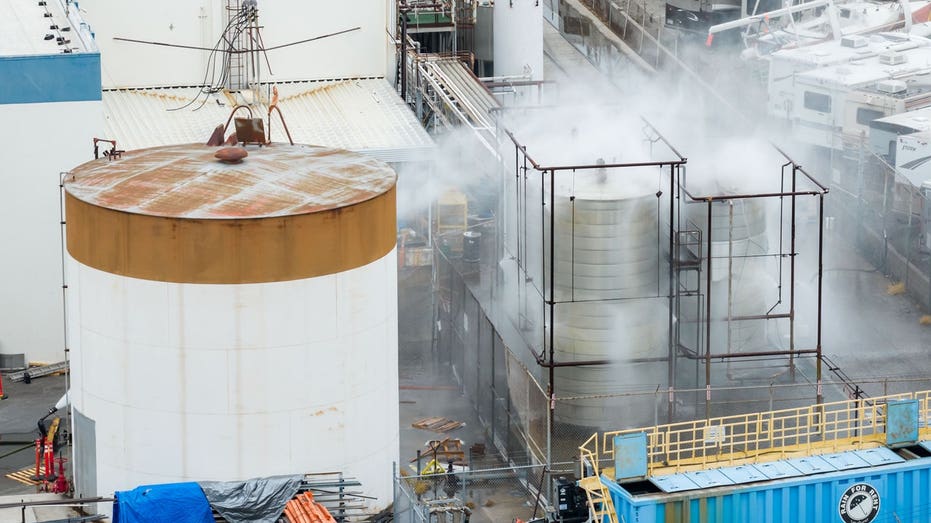
50,000 Californians Allowed Home After Chemical Tank Scare Exposes Safety Questions
After days of fear and uncertainty, all evacuation orders tied to a dangerous chemical incident at a Southern California aerospace facility have finally been lifted. Roughly 50,000 residents of Garden Grove and surrounding Orange County neighborhoods are now cleared to return home following a crisis involving a volatile chemical tank that officials warned could have exploded.
The emergency centered on a storage tank at GKN Aerospace Transparency Systems that contained methyl methacrylate (MMA), a highly flammable industrial chemical known to cause serious respiratory, neurological, and skin-related health problems when people are exposed to it. Authorities said the tank overheated, creating the risk of a catastrophic blast and forcing one of the largest precautionary evacuations in the region’s recent history.
Fire officials confirmed Tuesday evening that the final evacuation zone had been lifted after the tank’s internal temperature remained stable without mechanical assistance for several hours. Crews had worked around the clock since Thursday, when vapor was first reported leaking from the facility.
A Narrow Escape From Disaster
Over Memorial Day weekend, a crack unexpectedly formed in the tank, relieving pressure and reducing the likelihood of an explosion. While that development allowed most residents to return home earlier in the week, approximately 16,000 people remained displaced until Tuesday.
Emergency responders continuously sprayed water on the tank to lower temperatures that had climbed to 100 degrees before falling to 92 degrees. Firefighters and company specialists also removed insulation and activated sprinkler systems to bring the volatile situation under control.
Gov. Gavin Newsom declared a state of emergency on Saturday as authorities shifted from defensive containment to more aggressive measures aimed at preventing a worst-case scenario. According to Orange County Fire Authority Chief TJ McGovern, the crisis likely began when a cooling system designed to regulate the tank’s temperature failed.
“We don’t know why it stopped cooling,” McGovern said, noting that investigators are still working to determine how heat built up inside the pressurized tank holding 7,000 gallons of MMA.
Community Demands Accountability
Although public health officials have said air monitoring has not detected dangerous contamination levels, environmental oversight will continue for months. Authorities plan to test air quality, sewer systems, and storm drains to ensure residents — especially children, elders, and workers with underlying health conditions — are not exposed to lingering toxins.
Garden Grove Mayor Stephanie Klopfenstein pledged that the city would hold the company accountable. At a public meeting, concerned residents pressed local leaders on why massive quantities of hazardous chemicals were being stored so close to family homes in the first place.
- Why was such a large volume of MMA kept near densely populated neighborhoods?
- What safeguards failed?
- How can the community be assured this won’t happen again?
These are not abstract concerns. Across the country, working-class communities disproportionately shoulder the risks of industrial activity — often without full transparency or meaningful input. The Garden Grove scare is a stark reminder that corporate safety failures can place tens of thousands of lives in jeopardy.
Workers and Families Deserve Better Protections
GKN Aerospace, which manufactures engine structures and components for commercial and military aircraft, issued a statement apologizing for the disruption and pledging cooperation with authorities. But apologies alone will not restore trust.
This near-disaster underscores the urgent importance of strong environmental regulations, rigorous workplace safety standards, and real community oversight of industrial operations. When cooling systems fail and 7,000 gallons of flammable chemical begin heating inside a pressurized tank, it is not just a technical glitch — it is a public safety emergency.
Residents can now return home, but many are left grappling with deeper questions about corporate responsibility and regulatory enforcement. As investigations continue, families in Garden Grove will be watching closely — because the right to breathe clean air and live without fear of industrial catastrophe is not a privilege. It’s a fundamental right.
The crisis may be over for now, but the demand for accountability and stronger protections is just beginning.