We All Matter News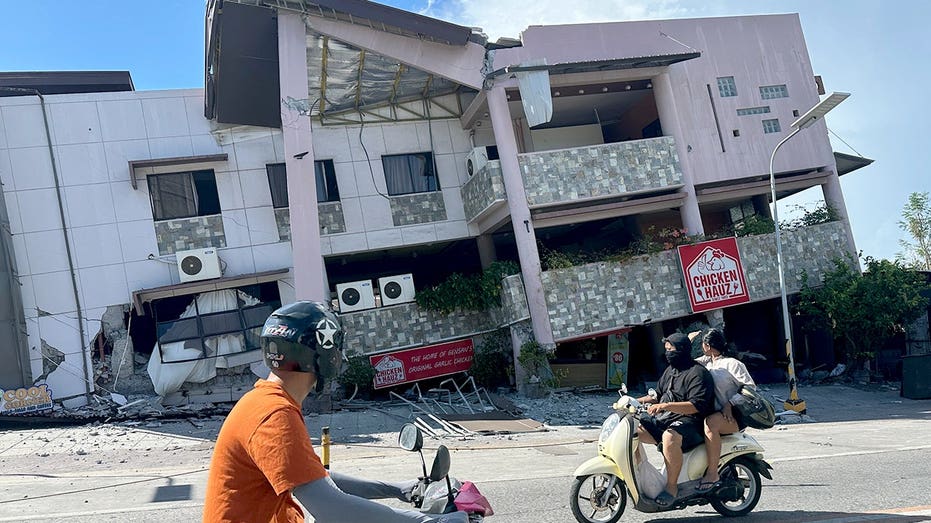
A Deadly Wake-Up Call: Powerful Earthquake Devastates Southern Philippines
A massive 7.8-magnitude earthquake struck off the southern coast of the Philippines early Monday morning, killing at least 32 people, injuring more than 200, and sending tsunami waves crashing into vulnerable coastal communities. The disaster, the strongest to hit the country this year, toppled buildings, triggered landslides, and left families across Mindanao reeling from grief and fear.
The quake’s epicenter was located beneath the sea about 32 kilometers southwest of Maasim in Sarangani province, at a depth of roughly 33 kilometers. Within minutes, a one-meter tsunami surged into parts of Mindanao’s coastline, damaging homes and adding to the chaos unleashed by the tremor.
Communities Crushed Under Falling Concrete
In the hard-hit city of General Santos — home to more than 700,000 residents and a crucial hub for the region’s tuna industry — low-rise buildings buckled and collapsed. At least 12 people remain missing as search and rescue crews race against time to locate survivors trapped beneath rubble in a supermarket, warehouse, grade school, and other damaged structures.
The majority of reported deaths were caused by collapsing buildings and falling debris, including at a damaged mosque. In Sarangani province, a landslide in the municipality of Glan buried villagers, killing at least 13 people. Four additional deaths were reported elsewhere in the province.
“The shaking was very strong and people dashed out of houses into the streets,” said regional civil defense official Rod Sosmeña, who was traveling in General Santos when the quake hit at 7:37 a.m.
The airport in General Santos temporarily shut down, forcing the cancellation of 17 domestic flights and slowing the arrival of aid and assessment teams.
Children Traumatized on First Day Back
The timing of the earthquake compounded its emotional toll. In Malita, more than 100 elementary school students and a dozen teachers had gathered for a flag-raising ceremony marking the first day of classes after summer break. What should have been a moment of celebration turned into panic as the ground suddenly convulsed.
“Their excitement on the first day of school turned to trauma,” said school principal Rosavel Cachuela.
While the children managed to remain mostly still — preventing injuries — the psychological scars may linger. A shed collapsed and damaged a motorcycle in the schoolyard, underscoring how close the day came to becoming even more tragic.
Tsunami Waves Felt Across the Region
Tsunami waves of up to one meter were recorded in parts of Sultan Kudarat and Sarangani provinces, with a 1.4-meter surge striking Kiamba at one point. Six stilt homes in a coastal village in Zamboanga del Sur were damaged by the combination of shaking and waves.
The quake’s impact rippled beyond the Philippines. Tsunami gauges recorded waves in Indonesia and Palau, and smaller surges were detected as far away as southern Japan. The Pacific Tsunami Warning Center later said the broader tsunami threat had largely subsided about five hours after the quake.
A Nation on the Front Lines of Climate and Seismic Crisis
The Philippines sits squarely on the Pacific “Ring of Fire,” a volatile arc known for frequent earthquakes and volcanic eruptions. The nation also endures an average of 20 typhoons and tropical storms each year — disasters that disproportionately harm working-class and rural communities with the fewest resources to rebuild.
President Ferdinand Marcos Jr. ordered the suspension of classes in affected areas and directed government agencies to accelerate disaster response efforts, pledging that “the national government is moving and we will not leave Mindanao behind.” International allies, including the United States, France, and New Zealand, signaled readiness to assist.
Yet as climate instability intensifies storms and as aging infrastructure leaves communities vulnerable to seismic shocks, this tragedy highlights the urgent need for resilient public investment. Disaster preparedness, affordable and earthquake-resistant housing, and fully funded emergency services are not luxuries — they are lifelines.
For the families of the 32 people who lost their lives and the hundreds more recovering from injuries, the focus now is immediate survival and rebuilding. But the devastation in Mindanao is also a stark reminder that protecting human life requires long-term commitments to safety, equity, and strong public institutions capable of withstanding the shocks of an uncertain world.