We All Matter News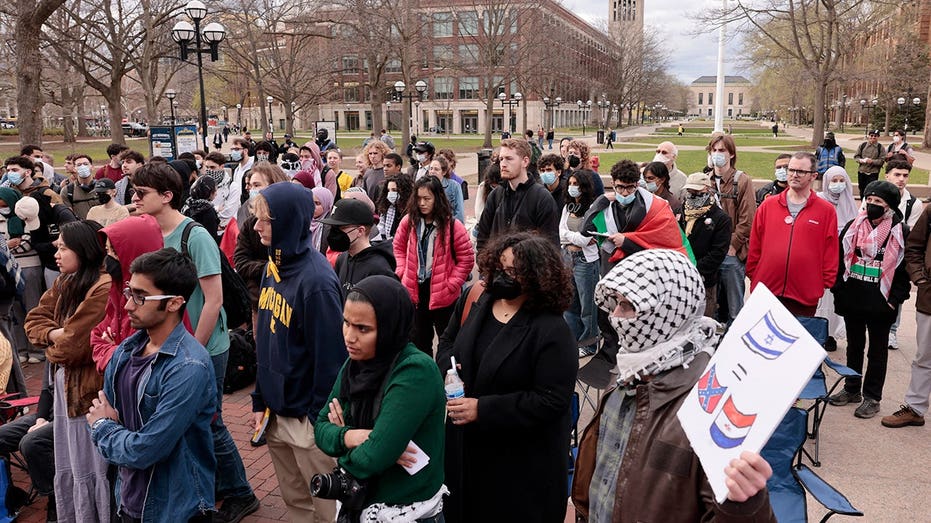
Activists Charged in University of Michigan Protest Case Released Pending Trial
Four young activists accused of threatening University of Michigan officials during protests over the school’s financial ties to Israel were released on bond Friday, as a federal judge weighed the serious nature of the charges against concerns about free speech and pretrial rights.
Zainab Hakim, 23; Paige Feyock, 26; Jonathan Zou, 22; and Colin Weger, 24, appeared before U.S. Magistrate Judge Anthony Patti and entered not guilty pleas. The group is part of a broader federal case in which eight people have been charged following an investigation led by the FBI. After a hearing in federal court, Judge Patti allowed the four to be released under strict conditions.
As part of their release, the defendants must surrender their passports, avoid contact with alleged victims and co-defendants, comply with GPS monitoring, and abide by travel restrictions. Prosecutors had argued that they should remain jailed, describing them as potential flight risks and dangers to the community.
In ordering bond, the judge reportedly raised concerns about the government’s reliance on social media posts and online communications — an acknowledgment of the constitutional stakes when political speech, even heated speech, becomes entangled with federal criminal charges.
Allegations of Escalating Intimidation
According to a federal indictment, the case stems from protests that intensified after the October 7, 2023 attacks by Hamas. Prosecutors allege that some activists coordinated efforts to pressure university leaders and local businesses to cut financial ties with Israel.
Authorities claim the tactics went beyond demonstrations and into acts of intimidation and vandalism. Among the incidents cited:
- Placing fake, sheet-covered “corpses” outside the home of a university regent in May 2024.
- Spray-painting messages such as “Free Palestine,” “Divest Now,” and “Intifada” on homes and buildings, including the university’s Jewish Federation Building on the anniversary of the October 7 attacks.
- Throwing glass jars filled with butyric acid or colored dye into residences.
- Caulking doors shut, locking entryways with bike locks, and breaking windows.
Prosecutors also allege that members of the group photographed some of the damage and shared images online.
Two of the defendants, Hakim and Feyock, face the most serious charge — witness intimidation — after allegedly threatening someone they believed might cooperate with law enforcement. If convicted, they could face up to 20 years in prison.
Disturbing Messages Cited in Indictment
The indictment describes private messages in which some defendants allegedly discussed harming perceived “targets.” One defendant, Ahmet Korkaya, appeared in federal court in Wisconsin earlier this week and is scheduled for a detention hearing. Prosecutors say he sent alarming text messages referencing violence against a target and their family.
Another defendant, Alexander Sepulveda, along with Zou, is accused of throwing jars filled with a blue liquid through the window of the provost’s home in March 2025 and spray-painting messages including “Divest” and “Free Palestine.” When authorities attempted to execute a search warrant at Sepulveda’s home in April 2025, prosecutors allege he deleted data from his devices after being tipped off via an encrypted chat.
Those charged with conspiracy to transmit threats or obstruct property seizure face up to five years in prison and substantial fines.
Free Speech and Accountability
The case unfolds amid intense national debate over campus protests, U.S. foreign policy, and the boundaries between protected political expression and criminal conduct. Across the country, students have organized demonstrations calling for universities to divest from companies connected to Israel’s military operations — part of a broader global movement focused on Palestinian human rights.
While acts of vandalism and threats of violence cannot be excused, civil liberties advocates warn that prosecutors must carefully distinguish between constitutionally protected protest and criminal wrongdoing. The courtroom fight ahead will likely test where that line is drawn.
At stake is not only the outcome for these young defendants, but the broader principle that political dissent — especially on deeply contested global issues — must be handled with both accountability and respect for democratic freedoms.
As the case proceeds, the legal system will be tasked with balancing community safety, the rights of those allegedly targeted, and the fundamental protections of speech and protest that remain cornerstones of American democracy.
News For All Americans.